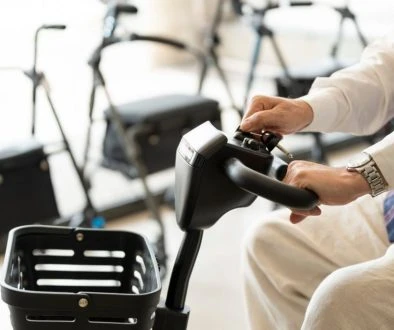

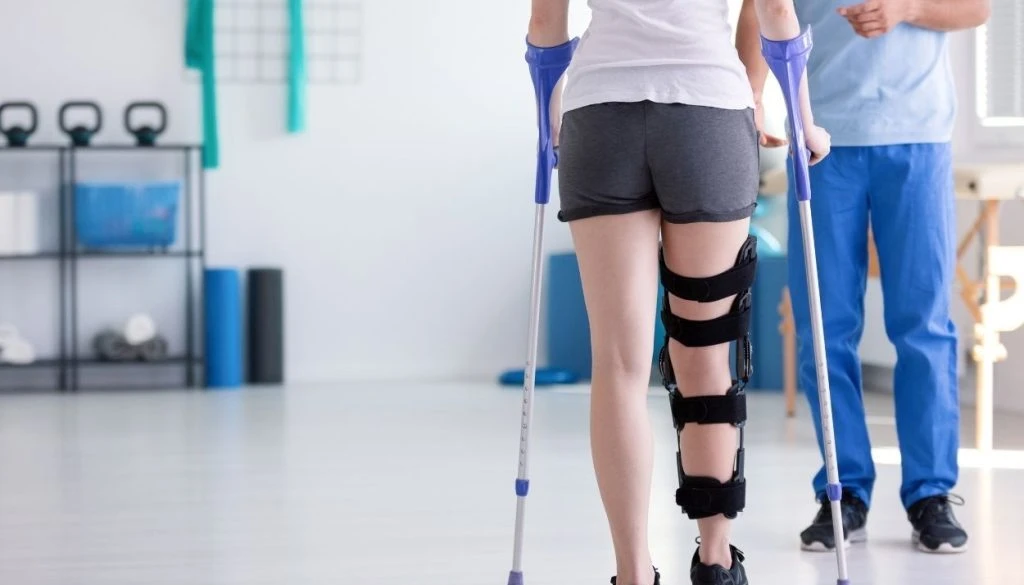
A comparison of energy consumption between the use of a walking frame, crutches and a Stride-on rehabilitation scooter
Article by: Nimesh Patel, Timothy Batten, Andrew Roberton, Doyo Enki, Guy Wansbrough, James Davis
Source: Science Direct
Highlights
-
The energy consumption ambulating with a Stride-on knee walker has not been investigated previously.
-
The use of a Stride-on knee walker requires less energy compared to ambulation with crutches or a frame.
-
This can be used in post-operative patients to aid rehabilitation in patients with reduced upper body strength or poor cardiovascular reserve.

Abstract
Background
Following foot and ankle surgery, patients may be required to mobilise non-weight bearing, requiring a walking aid such as crutches, walking frame or a Stride-on rehabilitation scooter, which aims to reduce the amount of work required. The energy consumption of mobilising using a Stride-on scooter has not previously been investigated, and we aim to establish this.
Methods
Ten healthy volunteers (5 males:5 females) aged 20–40 years mobilised independently, then with each mobility device for 3 min at 1 km/h on a treadmill, with rest periods, whilst undergoing Cardio-Pulmonary Exercise Testing (CPET). Oxygen consumption (VO2), carbon dioxide excretion (VCO2), minute ventilation (MV), respiratory rate (RR) and pulse (HR) were measured at baseline, and after 3 min of walking, without and with all 3 devices. Wilcoxon signed rank test was carried out to calculate significance with non-parametric values with Bonferroni correction.
Results
Three-point crutch mobilisation demonstrated significant increases in VO2 (0.7 L), VCO2 (0.7 L), MV (16.7 L/min), pulse (24.8 bpm) and RR (11.4 breaths/min) compared to walking (p < 0.05). Mobilisation with a frame produced significant (p < 0.05) increases compared to walking; VO2 (0.7 L), VCO2 (0.7 L), MV (18.3 L/min), pulse (35.9 bpm), and RR (11.7 breaths/min). Tests using the Stride-on demonstrated no significant increase compared to walking with regards to VO2 (0.1 L; p = 0.959), VCO2 (0.2 L; p = 0.332), pulse (10.1 bpm; p = 0.575), and RR (4.7 breaths/min; p = 0.633). The MV was significantly higher compared to walking (4.3 L/min; p < 0.05).
Discussion
Energy required for unit distance ambulation with a Stride-on device is similar to walking, and significantly lower than with a walking frame in single legged stance and three-point crutch mobilisation. This justifies its use as part of routine practice aiding early mobilisation of patients requiring restricted weight bearing or single legged weight bearing, especially in those with reduced cardio-pulmonary reserve as it is less physiologically demanding and does not rely on upper body strength.
More Ways to Stay Safe & Independent
View our range of hire and buy now mobility equipment including; wheelchairs, wheely walkers, bathroom aids and our growing range of daily living aids.